

Why Barefoot shoes?
Your feet contain 26 bones, 33 joints, and over 100 muscles, tendons, and ligaments — designed over millions of years to carry you across every terrain on earth. Barefoot shoes give your feet their job back.
Wider Toe Box
Foot-shaped design gives your toes space to splay for balance and power
Flexible Soles
Thin, flexible soles let your feet bend and feel the ground naturally
Zero Drop
Heel and forefoot at the same height for natural posture and alignment
Your Foundation
Your Feet Are Remarkably Capable — Modern Shoes Just Don't Know It
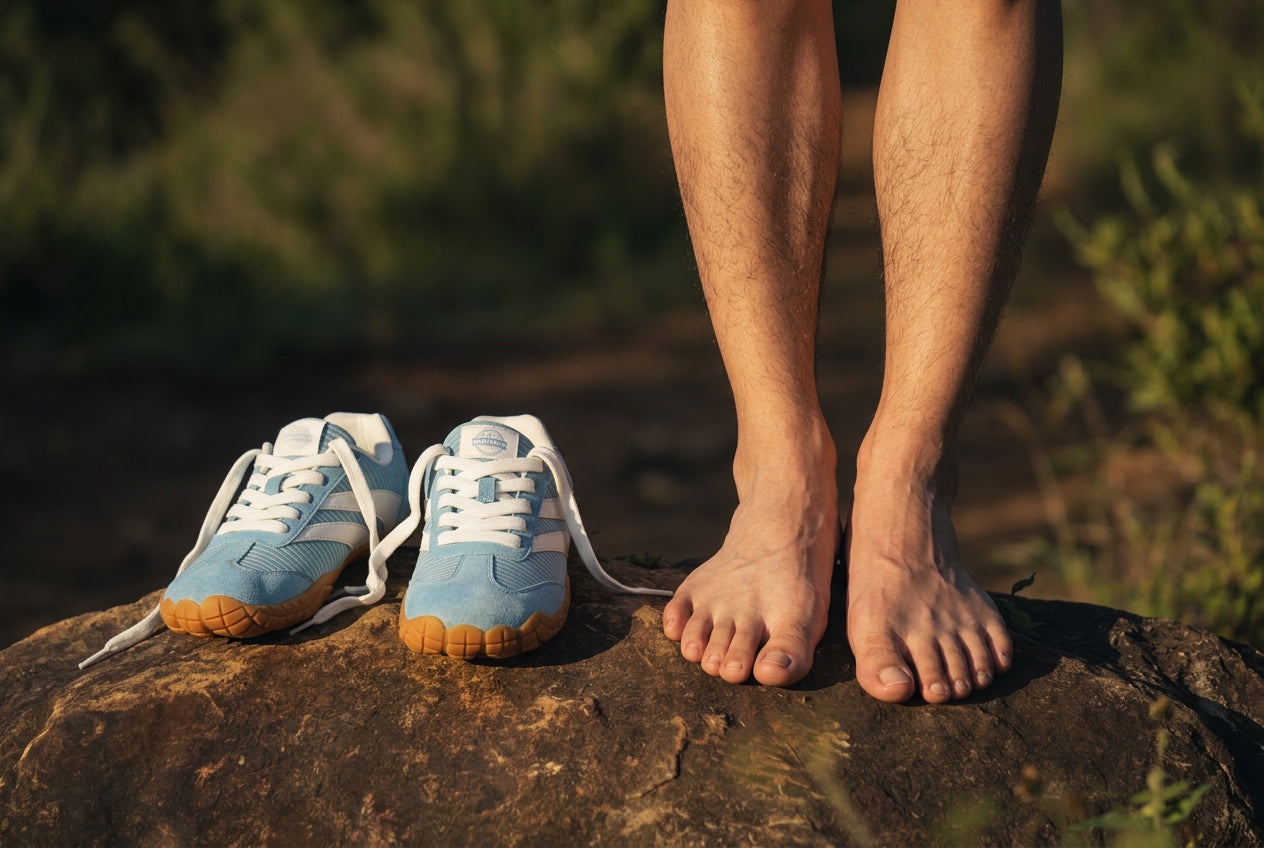
Your feet are your foundation — and they're far more powerful than most shoes let them be. Conventional footwear squeezes your toes, stiffens your stride, and cuts you off from the ground. Without all that in the way, movement becomes fluid and responsive — your foot lands softly, your arch stores and releases energy like a spring, and your toes do what they're made to do: stabilize, grip, and keep you balanced.
Every step is part of a full-body kinetic chain, from the ground up through your ankles, knees, hips, and spine. When your feet move freely, your whole body follows — better balance, better posture, better mobility.
Nearly every child comes into the world with healthy, wide, flexible feet — designed to develop through natural movement. Then we put shoes on them.
And the shaping begins.
The Problem
How Modern Footwear Works Against Your Body
Three design features of conventional shoes work against your body daily: elevated heels alter posture and gait, narrow toe boxes deform feet over time, and rigid soles cut off the sensory feedback your brain needs to move well.

Barefoot Shoes for Office Work and Walking Commutes (2026)
Find barefoot shoes that fit your office wardrobe and walking commute. Explore BareFrog color options, practical fit checks, sole considerations, and tips for introducing a new pair gradually.
Read more
What Are Barefoot Shoes? A Complete Guide to Everyday Footwear
Explore the essentials of barefoot footwear, from zero-drop soles and foot-shaped toe boxes to fit, everyday activities, research, and a gradual transition.
Read more
Barefoot Shoes for Weightlifting and Strength Training
Learn how barefoot shoes may feel during weightlifting and strength training, what zero-drop and toe-box width mean, and how to transition gradually.
Read more