

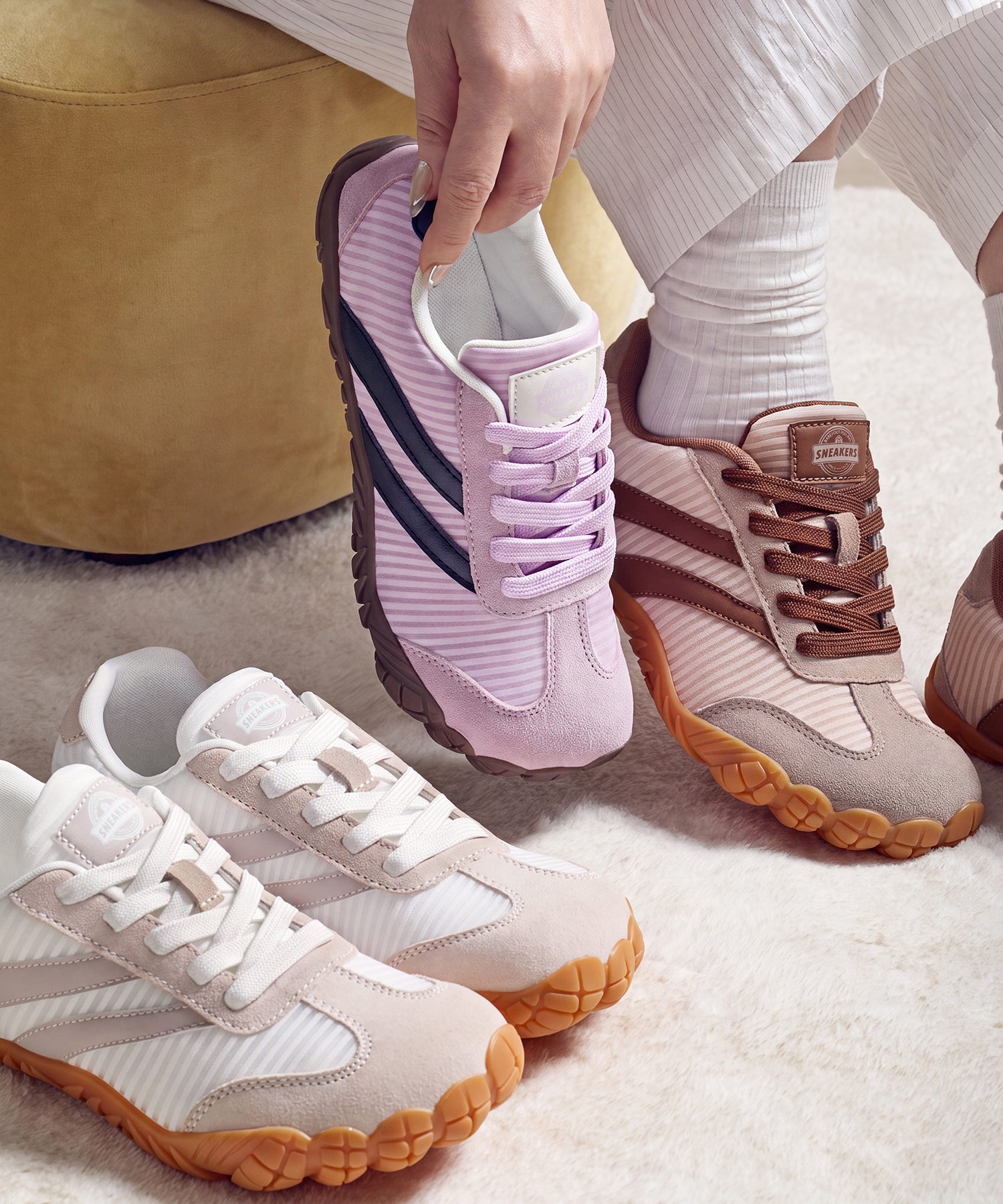
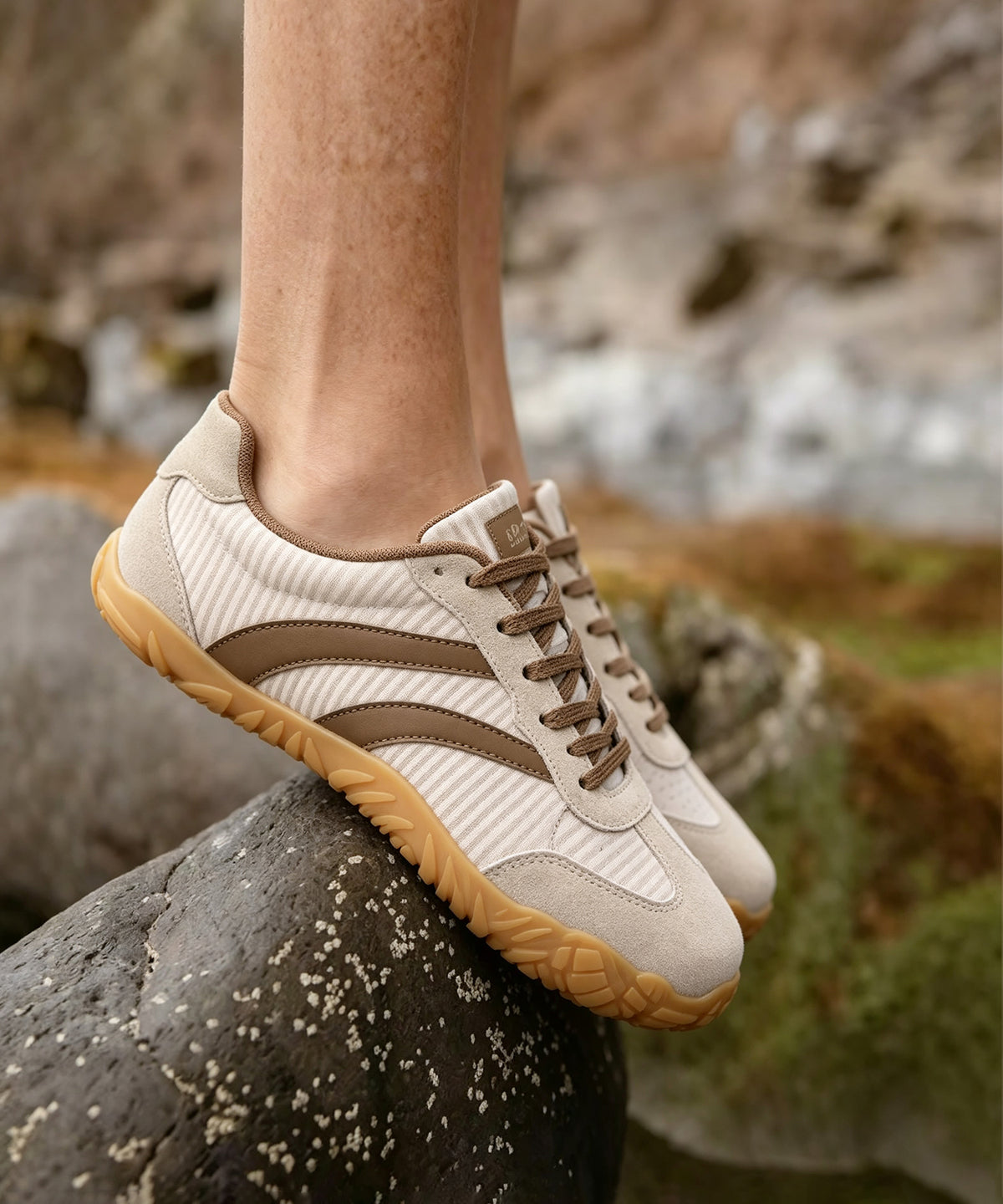

Barefoot shoes for office work and walking commutes should fit your feet securely, suit your workplace’s dress code, and feel appropriate for the surfaces you walk on. A wide toe box, zero-drop platform, and flexible sole are useful design features to compare, but none of them alone makes a shoe the right choice for your whole workday.
This 2026 guide focuses on everyday offices and walking commutes. It combines practical selection criteria with styling suggestions from BareFrog’s own range. The suggestions are based on product listings and intended outfits, rather than comparative wear testing or a ranking of the entire footwear market.
New to this style of footwear? Start with the basics of how barefoot shoes work. Here, we focus on choosing a pair for the journey to work and the hours that follow.

Which Barefoot Shoes Make Sense for Your Workday?
Start with two questions: what does your office allow, and what does your commute involve? A desk-based day with a short walk from the station is different from a long pavement walk followed by hours of standing. Choose for the complete routine.
| Your Routine | Prioritize | Check Before Choosing |
|---|---|---|
| Casual office, short walk | A secure everyday sneaker that works with your usual clothes. | Toe room, heel hold, and comfort during a short walking trial. |
| Business casual, mixed walking and transit | A restrained color and silhouette, plus a fit that stays secure on the move. | Whether sneakers are permitted on meeting days, not just casual Fridays. |
| Longer pavement commute | Sole feel, fit with your socks, and a gradual introduction. | Your response after walking, not just how soft the shoe feels in your hand. |
| Wet route or slippery entrance | Footwear selected for those surface conditions. | Relevant grip information and weather suitability; tread appearance is not proof. |
| Formal office or protective-footwear requirement | The specified dress or safety requirements. | Whether separate commute and work shoes are the more practical choice. |
Business casual does not mean the same thing in every workplace. A clean sneaker may be acceptable in one office and unsuitable in another. Check the expectation before buying a shoe specifically for work.
BareFrog Options for Different Office Wardrobes
For offices that allow sneakers, the following colors offer three ways to coordinate your footwear. These are styling suggestions from BareFrog’s current listings, not claims that one color or model delivers better walking performance. Use the individual product page to check construction, sizes, availability, and current pricing.
For Dark Trousers: Libre Ⅰ in Black
BareFrog Libre Ⅰ Barefoot Shoes in Black are a starting point for a wardrobe built around black, charcoal, or dark denim. Keeping the shoe color close to your trousers can make the footwear less visually prominent.
Styling match: an office that accepts casual sneakers and a darker palette. Tradeoff: black does not turn a sneaker into a formal dress shoe; inspect the complete design against your workplace’s expectations.
For a Lighter Wardrobe: Libre Ⅰ in Off-white
BareFrog Libre Ⅰ Barefoot Shoes in Off-white offer a lighter option to consider with beige chinos, neutral trousers, or casual office outfits. A simple palette lets the footwear sit comfortably within an outfit without relying on an athletic look.
Styling match: relaxed offices where light sneakers fit the dress code. Tradeoff: consider how visible marks will be on your route and follow the product’s care guidance.
For Blue and Grey Outfits: Libre Ⅱ in Navy Blue
BareFrog Libre Ⅱ Barefoot Shoes in Navy Blue provide another color direction for blue denim, grey trousers, and a casual jacket. Treat navy as an outfit choice, not a performance category.
Styling match: a casual work wardrobe that already includes blues and greys. Choose the color that works naturally with the rest of your wardrobe.
How Should Barefoot Office Shoes Fit?
A shoe can look right for the office and still be wrong for your foot. Check the length, width, depth, and fastening together. A roomy toe box should not come at the cost of a slipping heel.
Kent Community Health NHS footwear guidance highlights toe room, a comfortable heel fit, and a fastening that holds the foot securely. Those are general fit principles, not an endorsement of barefoot shoes or a specific brand.
- Use the model’s size guidance: Measure both feet and check the chart for the exact shoe. Avoid automatically sizing up to get more width.
- Check toe shape as well as width: Your longest toe needs room at the front, while the sides should not push your toes inward. A wide toe box and a wide-fit size are not interchangeable labels.
- Check the top of your foot: Pressure under laces may point to a mismatch in instep volume, even if the length is right.
- Walk and turn: The heel should feel secure without tightening the upper so much that it presses into your foot.
- Try your work socks: The sock-and-shoe combination is what you will actually wear. Check for seams, bunching, and changes in fit.
People with flat feet or high arches may have different comfort needs, so symptoms and individual fit matter more than arch shape alone. Fit decisions should reflect your individual needs, rather than arch shape alone.
What Matters on a Walking Commute?
Ground Feel on Pavement
A flexible sole can bend easily while still feeling quite different underfoot from another flexible sole. Compare the total sole thickness and cushioning, then assess the shoe during a manageable walk. The thinnest option is not automatically the best choice for your route or current footwear experience.
Think beyond the walk to the station: transfers, stairs, errands, and walking at lunch can add to your usual day. A shoe that feels good for a short trial has not yet been tested across that whole routine.
Rain, Entrances, and Surface Changes
A pavement route may also include polished floors, steps, and wet entrances. Do not infer slip resistance from a flexible sole, a rubber appearance, or the word “barefoot.”
The UK Health and Safety Executive’s guidance on slip-resistant footwear emphasizes selecting footwear for the environment and evaluating relevant performance information. Workplace requirements take priority where they apply. None of the styling suggestions above establishes certified slip resistance or suitability for hazardous work.
Weather and Care
Check the upper material, drying and cleaning instructions, and any stated water-resistance limitations. A dark color does not mean waterproof construction. If your commute regularly involves heavy rain or cold conditions, choose footwear intended for those conditions rather than relying on office styling alone.

How Do You Wear Barefoot Shoes with Business Casual Outfits?
Start with clothing you already wear. Compare the full silhouette in a mirror: the trouser hem, visible socks, shoe shape, and color matter together.
- Keep the palette simple: Black with darker trousers, off-white with lighter neutrals, or navy with blue and grey are practical starting points.
- Check the hem: Avoid trousers that drag across the heel or bunch over the shoe. Choose a length that works while walking as well as standing.
- Match the level of formality: A casual jacket and chinos may suit sneakers where a formal suit does not. Follow the actual dress code.
- Consider maintenance: Choose a finish and color you can keep presentable using the recommended care method.
If a meeting calls for different footwear, changing shoes at the office can be a reasonable solution. One pair does not have to cover every dress code and every route.

How Do You Start Wearing Barefoot Shoes to Work?
Your first day in a different shoe does not need to be your busiest day. A gradual trial gives you a chance to separate fit problems from the demands of a longer commute.
- Start with a familiar short outing: Choose a manageable route and check for rubbing, pressure, or slipping.
- Try part of your routine: Use the shoes for a short commute segment or a lighter day before extending wear.
- Keep the rest of the routine familiar: Avoid combining new shoes with a sudden increase in distance or pace.
- Review how you feel afterward: Increase exposure only when the current amount feels manageable. There is no universal timetable.
- Reassess persistent discomfort: Do not treat pain or numbness as a necessary stage of adapting.
If you use prescribed insoles or have a foot or lower-limb condition, seek advice specific to you before changing your setup. A general commuting guide cannot determine whether a particular shoe is appropriate for that condition.
Common Questions About Barefoot Shoes for Work
Are Zero-Drop Shoes Automatically Good Office Shoes?
No. Zero drop describes equal heel and forefoot height. It is a core BareFrog design feature, but office suitability also depends on fit, styling, surface conditions, and your response to wearing the shoe.
Can I Wear Barefoot Shoes for Standing All Day?
That depends on the individual, footwear, and work environment. A desk-based office with a walking commute differs from a shift spent standing. Do not use a short successful walk as proof that a shoe will be comfortable for an entire standing shift.
Do I Need a Different Pair for Commuting?
Not necessarily. One pair may work when the fit, route, and dress code align. Separate shoes make sense when formal clothing, weather, protective-footwear rules, or personal comfort create different requirements.
Can I Add an Insole for More Cushioning?
If you are considering an option such as BareFrog Transition Insoles, check compatibility and available space first. An extra insole changes how your foot sits inside the shoe and may reduce toe depth or heel security. Cushioning and arch support are different features; an insole is not automatically suitable just because it fits inside.
Find Your Everyday Office Pair
Choose around the routine you actually have: your clothes, feet, route, and working day. Start with the BareFrog color option that suits your wardrobe, then check the product details and fit before committing to a full commute.
Explore BareFrog barefoot shoes to compare current options for everyday wear.
Research & Further Reading
View sources
These resources support the general fit and footwear-selection guidance. They do not establish BareFrog product performance or endorse a particular shoe. Product names and colors were checked against BareFrog’s public listings for this guide.
- Footwear advice, Kent Community Health NHS Foundation Trust. General guidance on fit and fastening.
- Slip-resistant footwear, UK Health and Safety Executive. Guidance on choosing footwear for the working environment.
- BareFrog product listings. Source for the Libre model names and colors discussed; not comparative wear-test evidence.

